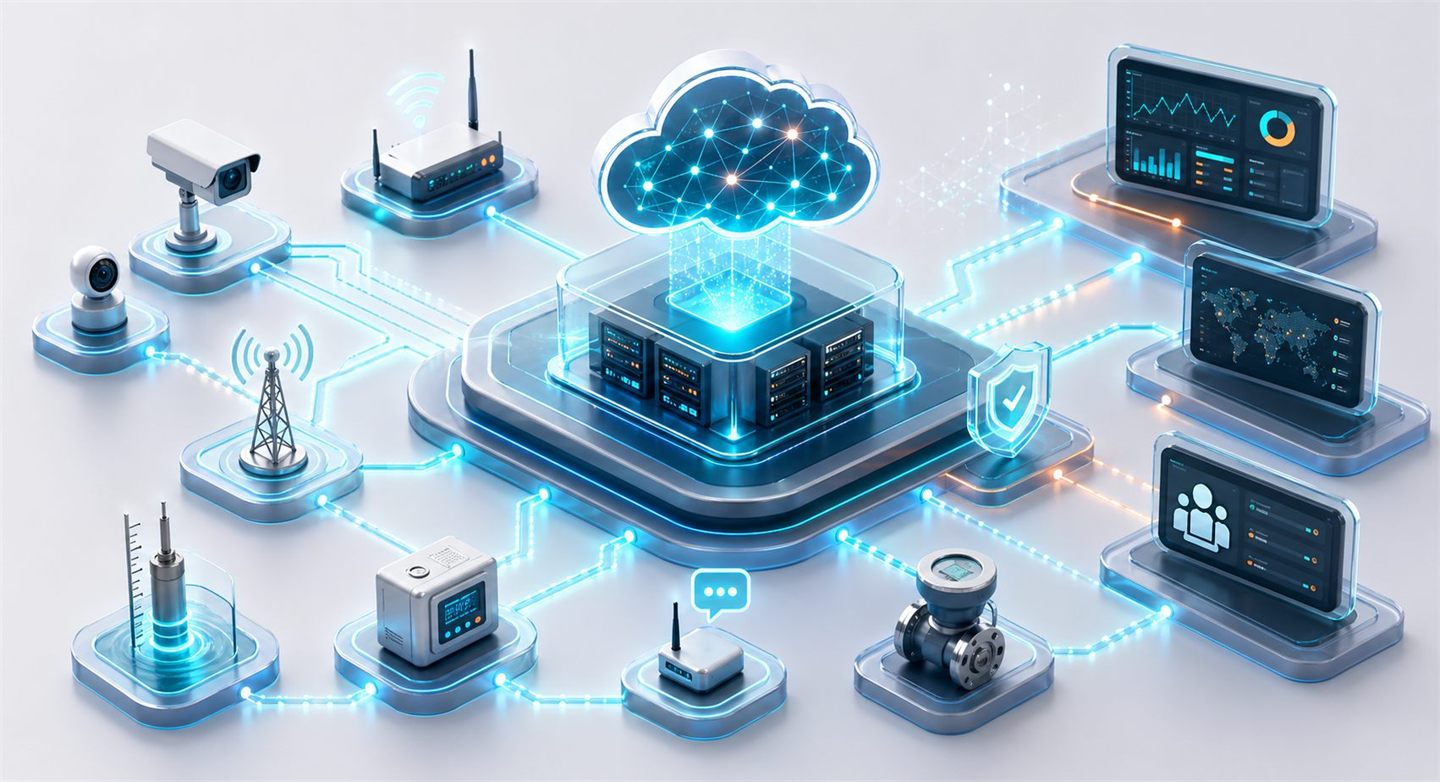
How Horus IoT connects devices, gateways, cameras, and external sources to normalize real-world signals and turn them into action.
Horus IoT inside the platform
Horus IoT is the device, data, and automation layer inside the Horus platform. Its function is to obtain knowledge from the real world and act on it, connecting devices, sensors, cameras, gateways, and external sources to transform scattered signals into reliable operational information.
Horus is more than data capture: it organizes data, stores it as its own history, analyzes it, and makes it available to each user according to role, permissions, instance, and decision-making needs.
What Horus does with IoT data
- Collects information from field devices and external platforms.
- Transforms received data into a homogeneous format.
- Builds history for predictive analysis of future situations.
- Supports forensic analysis of past events to assist decision-making.
- Controls data availability across users, teams, and application areas.
Commercial value of the IoT layer
Horus IoT turns field monitoring into a scalable operating capability. It helps reduce reactive visits, anticipate failures, protect distributed assets, and sustain continuity in sites where an undetected condition can become cost, downtime, or risk.
Commercially, the IoT layer enables deployments by site, sensor type, criticality, monitored asset, or use case. This makes it possible to start with a concrete need, such as energy, environment, fuel, or early warning, and grow toward automation, historical analysis, and distributed operation inside the same Horus platform.