
Using recorded history to anticipate situations, investigate events, and support operational decisions.
Turning history into decisions
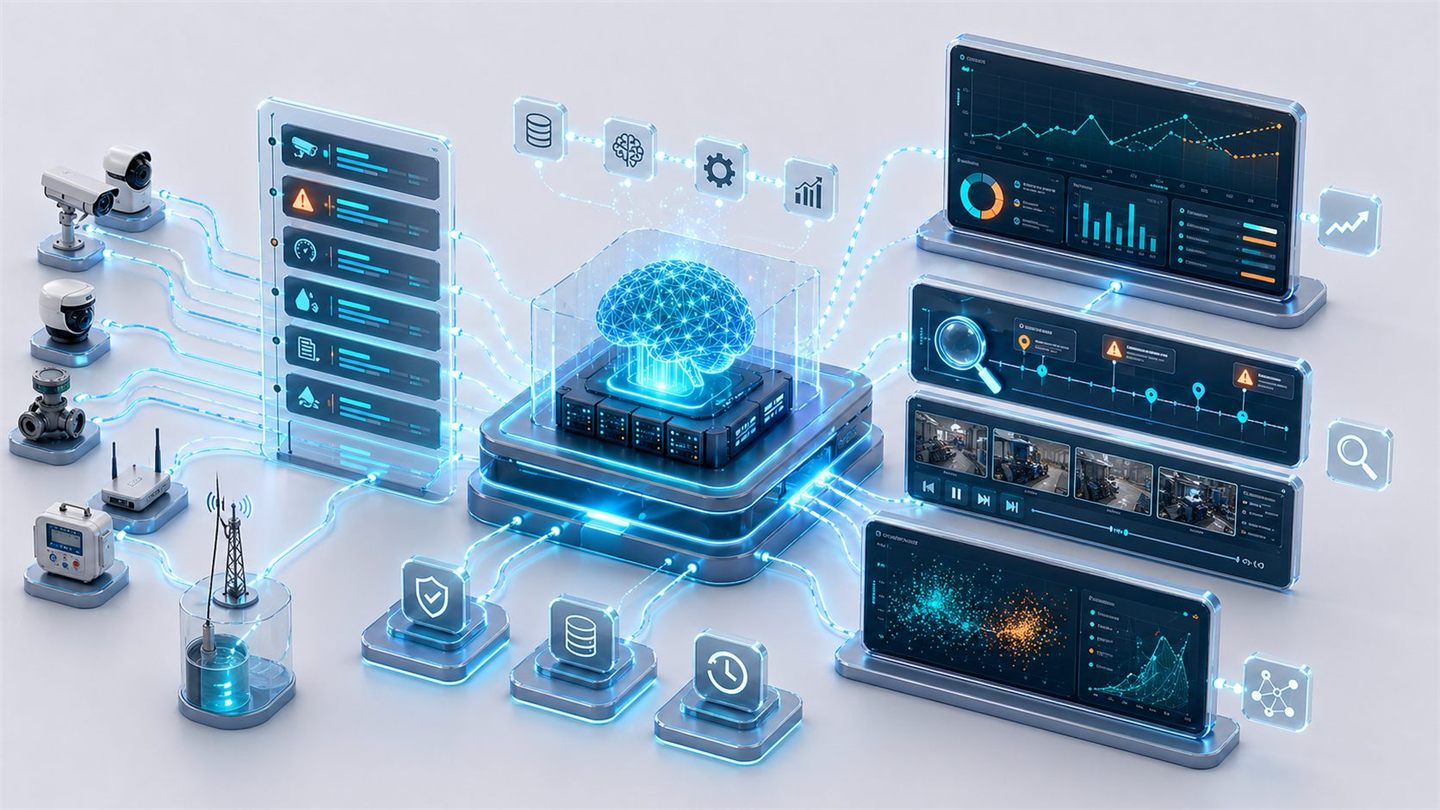
Every reading, state, alert, image translated into an event, or data point captured from an external platform feeds Horus's own history. That history makes it possible to understand how a site behaves, compare situations, and detect relevant changes.
Predictive analysis
Horus uses recorded data to analyze situations based on historical patterns. This helps anticipate failures, identify risk conditions, prioritize maintenance, and turn isolated signals into contextual alerts.
Forensic analysis
When a situation has already occurred, the platform helps reconstruct it. Events remain available to review sequences, correlate measurements, compare sources, and produce useful evidence for decision-making.
Video as data
Cameras expand the IoT scope because they allow images to become data. Horus can process streams to detect people, objects, states, or behaviors, and then treat those results as events within the same information model.
Practical impact
By combining normalized data, history, permissions, and analytics, Horus helps move from passive monitoring to a more preventive, explainable, and actionable operation.